By Darshan Honale | December 2025
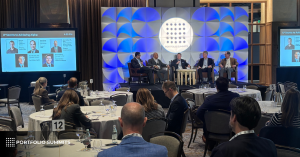
At the Texas LP Summit in Fort Worth (Bowie House), the agenda was a tight loop around one question: how do institutional allocators actually win now with slower exits, crowded trades, and more “productization” of private markets.
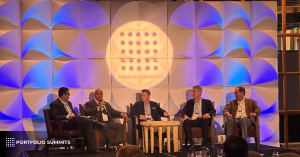
I had the privilege of moderating the closing panel, “LP Secrets to Achieving Alpha,” with LP and GP perspectives spanning bank platforms, family office allocations, healthcare-focused investing, and niche credit strategies.
Below is my synthesis of the day, what felt consistent across sessions, and what I’d translate into an LP-grade operating playbook.
1) Alpha is increasingly a process, not a slogan
In the closing panel, the most useful “alpha” answers weren’t abstract. They were operational:
- The inputs LPs now weight (team behavior, repeatability, risk discipline, transparency)
- The constraints LPs now treat as first-class (liquidity, pacing, concentration, governance)
- The edges that still exist (domain specialization, sourcing access, and structure)
This aligns with a broader point raised earlier: private market outcomes show meaningful dispersion and “outlier” dynamics, so your process and portfolio construction matter as much as manager storytelling.
2) Liquidity isn’t a side topic anymore; it’s part of the alpha definition
A recurring theme (explicitly in the closing panel) was that illiquidity is no longer just “the price of admission.” LPs are actively designing for it:
- pacing and vintage diversification
- manager selection that respects distributions, not just paper marks
- pragmatic use of secondaries/portfolio management tools when needed
The practical implication: “alpha” that ignores liquidity isn’t alpha, because it can’t be realized.
3) Private credit: return isn’t just spread, structure is the battleground
The private credit panel repeatedly emphasized:
- explosive growth has consequences for clearing price and deal protections
- “direct lending” buckets are less useful than style of execution and covenant quality
- Opportunistic/ABF requires real specialization; “tourist managers” are a risk
- valuation methodology and mark discipline are part of diligence, not an afterthought
My takeaway: in credit, alpha is increasingly “getting paid for complexity” only when you truly own the underwriting, servicing, and workout capability.
4) Passive private markets are no longer a thought experiment
The lunch talk made a provocative argument: public markets adopted passive as uncertainty rose and diversification won; private markets may move toward a “passive-alongside-active” equilibrium too, potentially very large over time.
Whether you agree with the endpoint or not, the pressure is real: LPs are scrutinizing net outcomes, fee drag, and the repeatability of “top quartile” selection narratives.
5) Real assets and power demand: the “picks and shovels” conversation is back
The real assets debate and energy/power focus reinforced something many allocators are quietly repositioning around:
- power demand is surging (AI and data centers are a meaningful driver)
- real assets underinvestment creates long-cycle opportunity sets
LP translation: if you want durable themes, look for where capital scarcity meets multi-year demand.
6) Venture: specialization and “why now” matter more than ever
The venture session framed a post-boom reality: allocators are navigating where opportunity still exists amid AI acceleration, healthcare innovation, and emerging blockchain/tokenization themes.
LP translation: generalist “spray and pray” is less compelling; domain specialization and clear underwriting heuristics are back in vogue.
7) An LP-grade “Alpha Checklist” (what I would actually write down)
If I had to reduce the summit into a usable allocator checklist:
Manager signals (beyond performance):
- intellectual honesty in tough marks / tough quarters
- clarity on sourcing and repeatability
- evidence of risk discipline (especially when markets are “easy”)
- operational capability (not just investment memos)
Portfolio signals:
- pacing discipline (avoid vintage cliffs)
- liquidity plan (not hope)
- concentration rules you can defend to your IC
Behavioral signals:
- stay in your lane, but stay curious
- be strategic and flexible when opportunity shifts (the “don’t marry the thesis” lesson)
Closing
I left Fort Worth with a simple conclusion: alpha has not disappeared it has moved.
It’s less about being “early” in a crowded trade, and more about
(1) specialization,
(2) structure,
(3) liquidity-aware construction, and
(4) disciplined manager selection.
If you were at the summit and want to compare notes (LP-to-LP or GP-to-LP from a learning lens), I’m always open to a thoughtful conversation.
(Standard note: this is not investment advice or a solicitation; it’s a synthesis of public conference discussions and personal takeaways.)