Why AI should compress diligence work, but never replace judgment
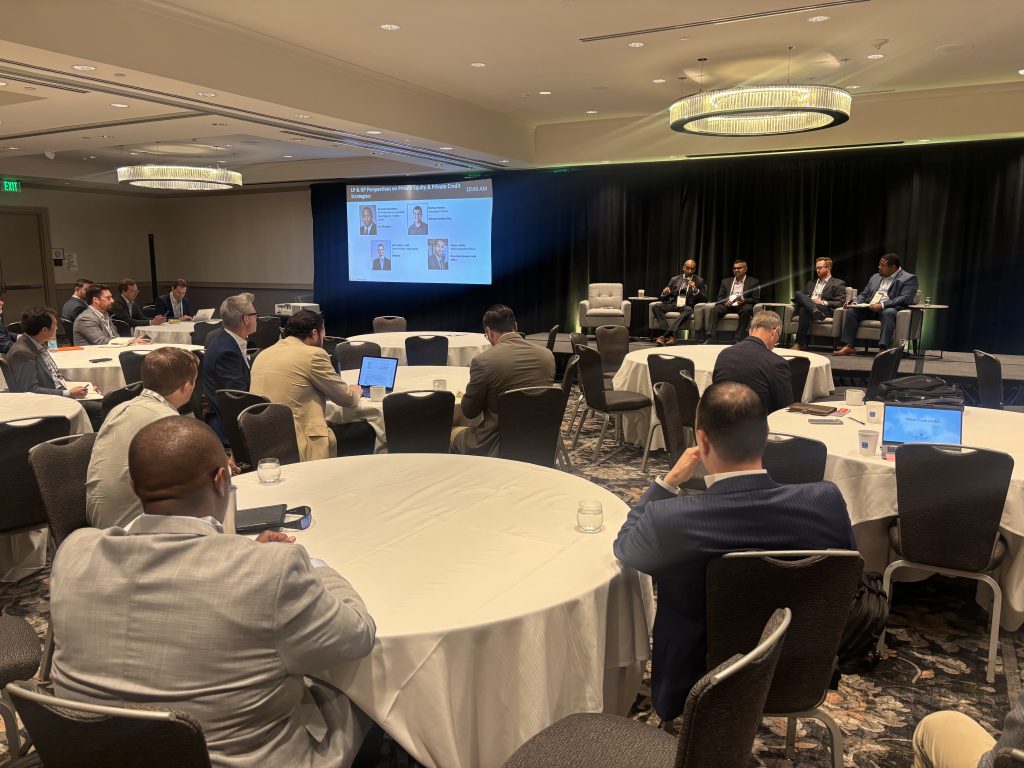
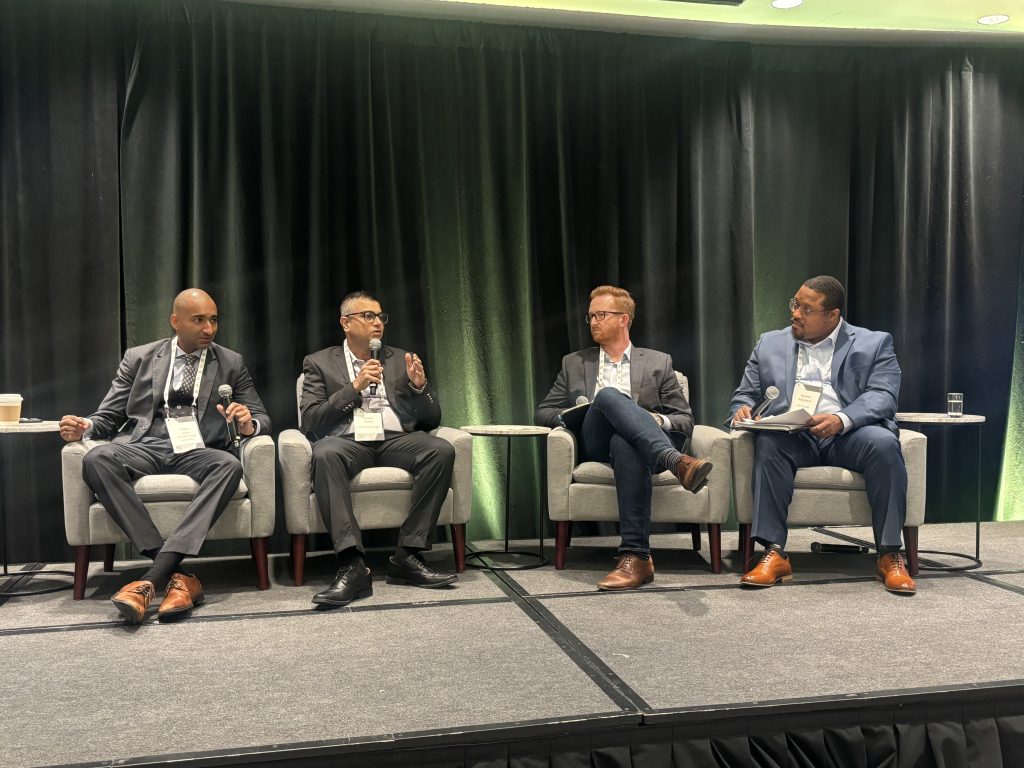
At the recent Southeast LP Summit in Atlanta, I had the opportunity to speak on a panel with allocators, fund managers, private equity professionals, private credit investors, family offices, and emerging managers.
The panel was not framed as an “AI panel.” It was a private markets conversation. But that is precisely why the AI discussion became more interesting.
The real question is no longer whether AI is useful. That debate is already behind us.
The sharper question is this:
In a private markets environment where LPs are overloaded, GPs are competing for attention, and family offices are increasingly being shown direct deals, what should AI actually produce in the first few hours of diligence?
Not in theory.
Not in a demo.
Not as a generic ChatGPT summary.
But in a real LP, family office, or investment committee workflow.
My view is simple:
AI should compress document review, comparable analysis, portfolio scans, sector and regulatory synthesis, and first-pass risk mapping — but judgment must stay human.
AI should get us to better questions faster.
It should not pretend to make the investment decision.
That distinction matters.
The private markets problem: too much information, not enough judgment bandwidth
Private markets are no longer short on information.
Most LPs and family offices are drowning in it.
A single opportunity can come with a pitch deck, fund model, track record file, PPM, LPA, subscription documents, portfolio company materials, market reports, consultant memos, reference calls, and several years of investor updates.
For direct deals, the problem can be even worse.
A family office may receive a startup deck, a SAFE, a cap table, product screenshots, founder bios, customer pipeline notes, regulatory claims, financial projections, and “strategic investor” language — all before anyone has clearly answered the basic question:
Why should this be a fit for us?
This is where many LPs and family offices lose time.
Not because they lack intelligence.
Not because they lack access.
But because every opportunity arrives in a different format, with different language, different assumptions, and different levels of completeness.
In private equity and private credit, the same issue appears in a different form. There is often more structure, more process, and more institutional language, but the core challenge remains the same:
How do we quickly separate what is decision-relevant from what is merely well-packaged?
The traditional diligence process was built for a world where information moved slowly.
That world is gone.
But the answer is not to outsource judgment to AI.
The answer is to use AI to create a better first-pass operating system for diligence.
What four hours should produce now
In my view, the first four hours of AI-enabled LP diligence should produce six things.
Not a final answer.
Not a buy/sell recommendation.
Not a magical investment memo.
Instead, AI should help produce six practical outputs that help an LP, CIO, family office principal, or investment committee decide whether the opportunity deserves more time.
1. A clean “what is this really?” memo
The first output should be a plain-English summary that strips away marketing language.
For a fund, that means answering:
- What is the strategy?
- Where does the return come from?
- What is the manager’s actual edge?
- What is repeatable versus episodic?
- What is the underlying exposure?
- What has to be true for this fund to work?
For a direct deal, that means answering:
- What problem is the company solving?
- Who is the buyer?
- Why now?
- What evidence exists that customers care?
- What is the company actually raising for?
- What are the biggest technical, commercial, regulatory, or financing risks?
A good AI-native diligence system should not simply summarize a deck.
It should translate the deck into investor logic.
That is a major difference.
Most decks are written to persuade.
Diligence needs to clarify.
2. A red, yellow, green risk map
The second output should be a structured risk map.
This is where AI can be extremely useful if properly guided.
For a fund, the risk map may include:
- Manager risk
- Strategy drift
- Team or key-person dependency
- Fund size versus opportunity set
- Track record attribution
- Portfolio construction risk
- Fee and liquidity terms
- Concentration risk
- Vintage-year exposure
- Unrealized markups
- DPI versus TVPI quality
For a direct company, the risk map may include:
- Founder-market fit
- Technology feasibility
- Customer concentration
- Regulatory exposure
- Reimbursement or payment risk
- Go-to-market motion
- Cap table complexity
- Runway
- Next-round financing risk
- Valuation versus stage
- Competitive intensity
The important thing is not that AI perfectly “scores” the opportunity.
The important thing is that AI helps create a first-pass map of where human diligence should focus.
This is especially valuable for family offices and smaller LP teams that may not have a full institutional research staff.
3. A comparable universe
The third four-hour output should be a comparable universe.
If this is a VC fund, what peer managers are operating in adjacent stages, sectors, geographies, or models?
If this is a PE fund, what strategies are comparable by company size, industry focus, leverage profile, and value-creation model?
If this is a private credit strategy, what are the relevant comparisons across seniority, collateral, sector exposure, floating-rate dynamics, covenant protection, and manager workout experience?
If this is a startup, what companies, incumbents, public comps, acquisition targets, and failed predecessors matter?
This is where AI can help compress hours of market mapping.
But again, judgment matters.
A comparable list is not useful if it is merely a collection of names.
The value comes from interpretation:
- Which comps are truly comparable?
- Which ones are misleading?
- Which companies benefited from a prior market cycle that may not repeat?
- Which managers generated returns because of skill versus beta?
- Which startups look similar on the surface but have completely different business models underneath?
AI can build the map.
Humans still need to read the terrain.
4. A portfolio fit and overlap scan
For LPs and family offices, the question is rarely just:
Is this good?
The better question is:
Good for whom?
A great fund may still be a poor fit for a specific portfolio.
A promising direct deal may duplicate exposure the family office already has.
A private credit strategy may look attractive in isolation but increase correlation risk across the portfolio.
A venture fund may be compelling, but if the LP already has exposure to the same stage, same geography, same AI infrastructure layer, or same set of downstream co-investors, the marginal value may be lower.
An AI-enabled diligence process should quickly scan for:
- Existing exposure overlap
- Stage concentration
- Sector concentration
- Geography concentration
- Manager overlap
- Counterparty overlap
- Liquidity mismatch
- Potential conflicts
- Follow-on reserve implications
- Strategic relevance
This is especially important in family offices, where portfolios are often less standardized than institutional portfolios.
Some family offices are highly sophisticated and operate like small endowments.
Others are more opportunistic, relationship-driven, or founder-led.
In both cases, AI can help convert a scattered portfolio view into a more disciplined exposure map.
5. Sector and regulatory synthesis
One of the biggest mistakes in early diligence is treating sector knowledge as generic.
It is not.
Healthcare AI is not the same as enterprise SaaS.
Energy infrastructure is not the same as consumer marketplaces.
Medical devices are not the same as fintech.
AI infrastructure is not the same as AI workflow automation.
Private credit in asset-backed lending is not the same as direct lending to sponsor-backed middle-market companies.
A first-pass diligence workflow should produce a sector-specific synthesis:
- What are the key regulatory issues?
- What buyer behavior matters?
- What data rights matter?
- What reimbursement or compliance issue could derail the model?
- What macro factor could change the return profile?
- What adoption bottleneck is most likely?
- What would an industry operator ask that a generalist investor might miss?
This is where i2VC’s broader thesis becomes very relevant.
As AI compresses research work, domain expertise becomes more valuable, not less valuable.
The person who has spent 20 years in healthcare, insurance, energy, manufacturing, banking, logistics, or government procurement may see a risk in five minutes that an AI summary will miss.
The best diligence process is not AI-only.
It is AI plus expert judgment.
6. The questions that matter
The most valuable four-hour output may not be the memo.
It may be the question list.
A strong AI-native diligence process should generate a set of questions for:
- The GP
- The founder
- The CFO
- The operating partner
- The reference call
- The legal review
- The technical diligence expert
- The sector operator
- The investment committee
The questions should not be generic.
A weak question sounds like this:
“Can you tell us more about your strategy?”
A better question sounds like this:
“Your track record appears to rely heavily on two unrealized positions marked above cost. What portion of the current TVPI is driven by those positions, what valuation methodology was used, and how much liquidity has actually been returned to LPs?”
A weak question:
“What is your AI moat?”
A better question:
“Which part of the product improves as proprietary data accumulates, and which part is likely to be commoditized as foundation models improve?”
A weak question:
“What is your regulatory strategy?”
A better question:
“Which specific regulatory, reimbursement, data privacy, or clinical validation milestone is the gating item for commercial adoption, and who on the team has previously navigated that path?”
That is the difference between AI as a summary tool and AI as a diligence accelerator.
The beer and froth problem
One analogy I like is the beer and froth problem.
In overheated markets, especially around AI, there is a lot of froth.
There are impressive demos.
There are polished decks.
There are inflated claims.
There are “AI-native” companies that are really workflow wrappers.
There are funds repositioning old strategies with new AI language.
There are companies that sound revolutionary but may not have durable data rights, distribution, regulatory clarity, or economic leverage.
AI can help identify the froth.
It can compare claims.
It can flag missing evidence.
It can find inconsistencies across documents.
It can benchmark language against peers.
It can summarize technical and regulatory claims.
But AI cannot decide whether the underlying beer is worth drinking.
That remains a human investment judgment.
And in private markets, that judgment is shaped by things AI cannot fully understand on its own:
- Trust
- Reputation
- Incentives
- Governance
- Manager character
- Founder resilience
- Market timing
- Quality of references
- Ability to execute when conditions change
- Difference between access and edge
- Difference between a good story and a durable business
Why this matters more for family offices
The family office conversation at LP events is always interesting because family offices sit in a unique position.
They can move faster than institutions.
They can be more flexible.
They can invest directly.
They can back emerging managers.
They can be strategic LPs.
They can introduce customers, operators, and follow-on capital.
But they also face a real challenge: bandwidth.
Many family offices see a high volume of opportunities but do not have the same internal staff depth as pensions, endowments, or large consultants.
That creates a dangerous gap.
They may have access to very interesting opportunities, but not enough structured diligence capacity to evaluate them consistently.
AI can help close that gap.
Not by replacing the CIO or principal.
But by creating a repeatable first-pass discipline.
Every fund or direct deal should go through the same initial operating system:
- What is it?
- Why does it matter?
- What has to be true?
- What are the risks?
- What is the comparable universe?
- How does it fit our portfolio?
- What are the next ten questions?
- Who needs to review it?
- What would make us say no quickly?
- What would make us lean in?
This is not glamorous.
But it is powerful.
Why this matters for emerging managers
For emerging managers, AI-native LP diligence cuts both ways.
On one hand, it can help LPs evaluate more managers faster.
That is good for managers who previously struggled to get attention because they lacked brand recognition.
A smaller or emerging GP with a clear thesis, clean data room, transparent portfolio construction, and strong domain insight can benefit from AI-enabled diligence because the LP can process the opportunity more efficiently.
On the other hand, AI will make vague positioning harder to hide.
If a manager’s deck says “AI,” “proprietary sourcing,” “operator network,” or “value-add” without evidence, AI can quickly surface the gaps.
The next generation of LP diligence will not reward the loudest narrative.
It will reward clarity.
Emerging managers should prepare for this.
They should make it easy for LPs to understand:
- What they invest in
- Why they are credible
- How they source
- How they win allocation
- How they construct portfolios
- How they support companies
- How they manage reserves
- How they think about exits
- How they report
- What lessons they have learned
- Where they have made mistakes
The best managers will use AI themselves to improve the LP experience.
A good data room should not just contain documents.
It should be structured for diligence.
Why this matters for GPs
For established GPs, AI-native diligence means LPs will expect faster and clearer answers.
The old model of sending a deck, scheduling a call, and slowly moving through questions over weeks may still exist for large allocations, but first-pass screening will compress.
LPs will increasingly expect:
- Cleaner data rooms
- More structured track record attribution
- Clearer portfolio construction logic
- Better discussion of unrealized marks
- More transparent value-creation evidence
- Faster responses to diligence questions
- Better sector context
- More precise differentiation
This will be especially true in a fundraising environment where LPs are selective and distributions remain a key concern.
When DPI is scarce, narrative alone is not enough.
LPs want evidence.
AI will help them ask for that evidence faster.
Where AI can go wrong
It is important to be clear: AI-native diligence can be dangerous if used carelessly.
The risks are real.
AI can hallucinate.
It can misread legal documents.
It can summarize outdated information.
It can over-index on polished language.
It can produce false precision.
It can miss nuance in fund terms.
It can confuse similar companies.
It can fail to understand regulatory complexity.
It can overweight easily available public data.
It can create a beautiful memo that feels more authoritative than it deserves to be.
That is why the correct workflow is not:
“Ask AI whether we should invest.”
The correct workflow is:
“Use AI to organize the evidence, identify gaps, compare claims, generate questions, and accelerate human review.”
The human remains accountable.
The investment committee remains accountable.
The LP remains accountable.
AI is not the fiduciary.
The new diligence stack
The emerging diligence stack for private markets will likely include five layers.
1. Document ingestion
Decks, PPMs, LPAs, models, updates, cap tables, memos, and data room files.
2. Structured extraction
Terms, fees, strategy, team, portfolio, performance, ownership, leverage, covenants, risks, and milestones.
3. External comparison
Peer funds, comparable companies, market data, regulatory context, sector trends, and exit environment.
4. Portfolio fit
Exposure, concentration, liquidity, correlation, strategic relevance, and follow-on implications.
5. Expert judgment
LP experience, operator insight, reference calls, legal review, sector expertise, and investment committee debate.
The winning workflow is not man versus machine.
It is machine-speed preparation plus human-quality judgment.
The bigger shift: from access to clarity
One of the recurring themes in private markets is access.
Who has access to the best managers?
Who has access to the best direct deals?
Who gets into the oversubscribed funds?
Who gets the co-investment rights?
Access still matters.
But access is not the only edge.
In a world where more deals circulate faster and more managers can reach more LPs, the scarce resource becomes clarity.
- Can you understand the opportunity quickly?
- Can you identify the real risk?
- Can you know what you know and what you do not know?
- Can you distinguish good complexity from bad complexity?
- Can you tell whether a direct deal is strategic or merely exciting?
- Can you tell whether a GP’s edge is repeatable?
- Can you decide what not to spend time on?
That is the real edge.
AI-native diligence should help investors move from access to clarity.
What LPs should ask their teams now
LPs, family offices, and emerging allocators should be asking a very practical question:
If we receive a fund deck or direct deal today, what can our process produce in four hours?
Can we produce:
- A memo?
- A risk map?
- A comparable universe?
- A portfolio overlap scan?
- A sector and regulatory synthesis?
- A question list?
- A clear next-step recommendation?
Can we identify who needs to review the opportunity next?
Can we decide whether to pass, monitor, or proceed?
If the answer is no, then the issue is not just AI adoption.
The issue is diligence design.
AI will not fix a broken process.
But it can make a good process much faster.
What GPs and founders should do now
GPs and founders should assume that LPs and family offices will increasingly use AI in first-pass review.
That means materials need to become more structured, more transparent, and more evidence-based.
For GPs:
- Make track record attribution clear
- Separate realized from unrealized performance
- Explain portfolio construction
- Document sourcing edge
- Show reserve logic
- Clarify team roles
- Be honest about mistakes
- Make your data room diligence-ready
For founders:
- Show customer evidence
- Clarify buyer and budget owner
- Explain why now
- Identify regulatory or technical gating risks
- Make use of proceeds specific
- Show what milestones the round unlocks
- Avoid vague AI language
- Clarify what is proprietary versus commoditized
In both cases, the future belongs to those who can make diligence easier without making the story shallow.
The role of domain experts
This is where I believe industry experts will become increasingly important in venture and private markets.
AI can summarize a medical device deck.
But a clinician, medtech operator, payer expert, or reimbursement specialist may immediately see the adoption barrier.
AI can summarize an insurance automation company.
But a P&C operator may understand why brokers will or will not change workflows.
AI can summarize a private credit strategy.
But a seasoned credit investor may see covenant weakness, collateral risk, or workout assumptions that do not hold in a downturn.
AI can summarize an energy infrastructure opportunity.
But an operator may understand permitting, interconnection, power availability, supply chain, and execution timing in a way a generic memo cannot.
The future of diligence is not just AI-native.
It is expert-augmented.
That is a major part of the i2VC thesis.
As software and research become easier to produce, deep domain judgment becomes more valuable.
Conclusion: AI should shorten the path to judgment
The best use of AI in LP diligence is not to make investors lazy.
It is to make them sharper.
AI should compress the first layer of work.
It should reduce repetitive document review.
It should surface inconsistencies.
It should map the market.
It should create better questions.
It should help small teams behave with more institutional discipline.
It should help family offices avoid reactive decision-making.
It should help emerging managers communicate more clearly.
It should help LPs focus their time where human judgment matters most.
But it should not replace the final act of investing: deciding what matters, what is credible, what is repeatable, and what is worth underwriting.
In private markets, judgment is still the product. AI just changes how quickly we can get to it.
Want the AI-Native LP Diligence Checklist?
At i2VC, we believe the future of private markets diligence is not AI-only.
It is AI plus domain expertise, allocator judgment, and structured decision-making.
If you are a family office, LP, emerging manager, GP, or industry expert interested in building better diligence workflows, connect with i2VC.